Understanding Federated Authentication and Authorization Technologies (SAML, SCIM, OIDC)
Understanding federated authentication and authorization technologies: SAML, SCIM, and OpenID Connect.
TL;DR Too lazy to read? Click here.What Is Federated Authentication?
Federated authentication is an identity management model that allows independent entities to securely share credentials and authentication information.
In this model, users from one domain can access resources and services in another domain without needing to create new accounts or credentials.
This is possible by establishing a relationship of mutual trust between identity providers and service providers, and is based on established standards and protocols such as SAML, OAuth, and OpenID Connect.
Is Federated Authentication the Same as SSO?
No! Although they are often confused or used interchangeably, federated authentication and Single Sign-On (SSO) are not the same concept.
SSO is a process through which a user can use one set of credentials to access multiple applications or systems, reducing the need for multiple authentications.
Federated authentication, on the other hand, is a broader identity management model that can include SSO as one of its components, especially in scenarios where authentication needs to be shared between separate systems that may be operated by different organizational entities.
What Is the Difference Between Federated Authentication and Delegated Authentication?
The main difference between federated authentication and delegated authentication lies in the ownership and management of credentials.
In federated authentication, user credentials are not transferred or exposed to service providers. In contrast, in delegated authentication, a trusted third party (such as Google or Facebook) is responsible for authenticating the user and then communicating that authentication to the requesting service provider.
Thus, delegated authentication can be considered a subset of federated authentication, where one system trusts the authentication performed by another system.
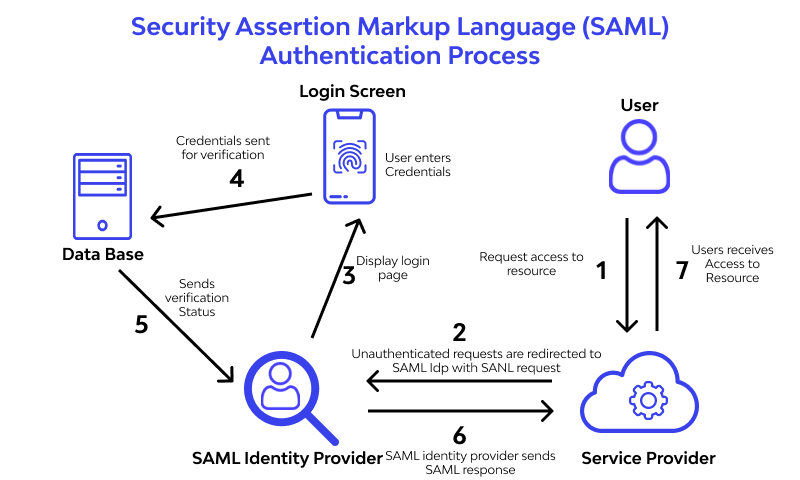
SAML (Security Assertion Markup Language)
SAML is an XML framework used to exchange authentication and authorization data between trusted parties, often used to implement Single Sign-On (SSO) in enterprise systems.
It allows users to access multiple online services with a single authentication session, improving the user experience and increasing security.
SCIM (System for Cross-domain Identity Management)
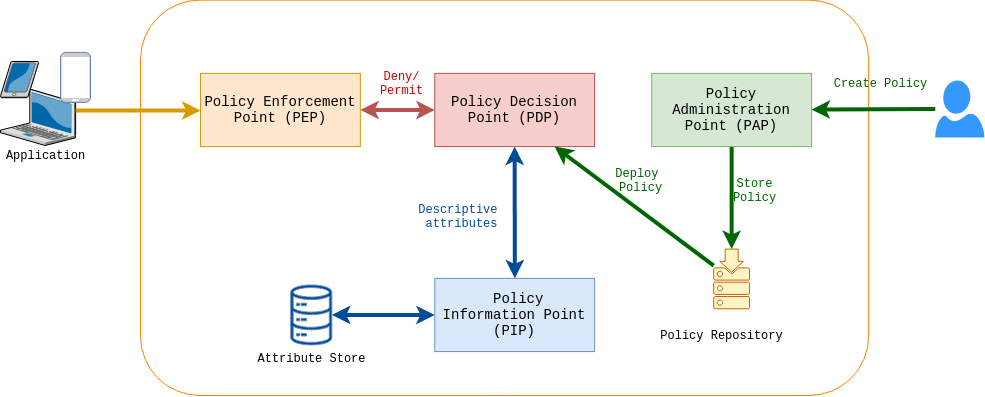
SCIM is an open standard that facilitates the automated management of user identities in cloud-based applications and services.
It was designed to promote integration and interoperability between different identity management (IDM) systems and SaaS applications, allowing changes, such as user creation or deletion, to be synchronized automatically through the cloud.
OIDC (OpenID Connect)
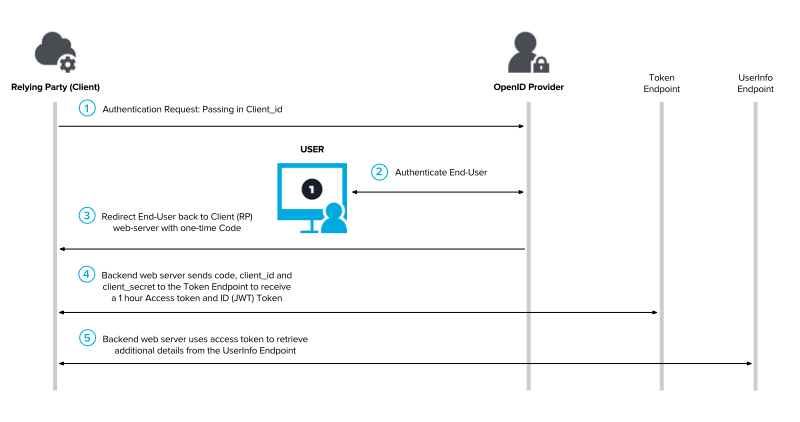
OpenID Connect is an identity layer protocol based on OAuth 2.0.
It allows clients to verify the identity of the end user based on authentication performed by an authorized identity provider, as well as obtain basic profile information about the end user.
It extends OAuth 2.0 to enable user authentication, providing a mechanism that allows applications to trust the identity assertions supplied.
How Do You Implement These Technologies?
Implementing federated authentication and OAuth in applications and services requires careful planning and an understanding of the underlying principles. Organizations need to choose the right protocols for their needs, configure infrastructure securely, and work to ensure the best possible user experience.
This process begins by defining business and security requirements and continues with the integration of the right authentication technologies. A successful implementation must also consider compliance with privacy and data protection regulations, ensuring that authentication practices align with expectations and legal requirements.
- Clearly defining the system’s requirements and scope.
- Choosing the appropriate protocol (SAML, OAuth, OpenID Connect, etc.)
- Configuring secure infrastructure, including servers, keys, and certificates.
- Developing or adapting applications and user interfaces for seamless authentication.
- Rigorous and repeated testing to ensure security and effectiveness.
Combining Strengths for Robust Security
Adopting these technologies together allows organizations to establish a more robust digital security system. The ability to manage identities consistently and securely, as well as provide streamlined access to a variety of applications, is the foundation of a modern, efficient digital environment.
Successfully implementing SAML, SCIM, and OIDC depends on understanding the particular characteristics of each standard and designing an architecture that uses them in harmony to maximize benefits and security for the organization and its users.